A Practical Guide to Running Ads in 2026 (Without Burning Cash)
Facebook and Instagram ads are getting expensive. Here is a grounded approach to testing creatives and using authentic content to lower your ad costs.
If you're a small business owner in India, running paid ads on Facebook or Instagram can feel like gambling. You put money into the machine, press "Boost Post," and hope that clients magically appear on the other side. More often than not, the budget drains, you get a handful of irrelevant likes, and your inbox remains completely empty. It's frustrating, and it leads many founders to falsely conclude that "ads don't work for my industry."
The truth is, paid ads absolutely work in 2026. But the playbook has changed completely. The days of throwing up a stock image with a 20% discount code and getting cheap leads are over. Ad costs have risen, user attention spans have shrunk, and the algorithms are smarter. Here is a grounded, practical guide to running ads profitably without setting your budget on fire. We will cover the most critical components of a successful ad strategy so you can stop wasting money and start generating predictable revenue.
1. Never Use the "Boost Post" Button
Let's get this out of the way first: The big blue "Boost Post" button on Instagram and Facebook is a trap designed to separate small business owners from their money. It gives you minimal targeting options and optimizes for the wrong metrics (likes and engagement instead of actual leads or purchases).
Decoding the Meta Ads Algorithm
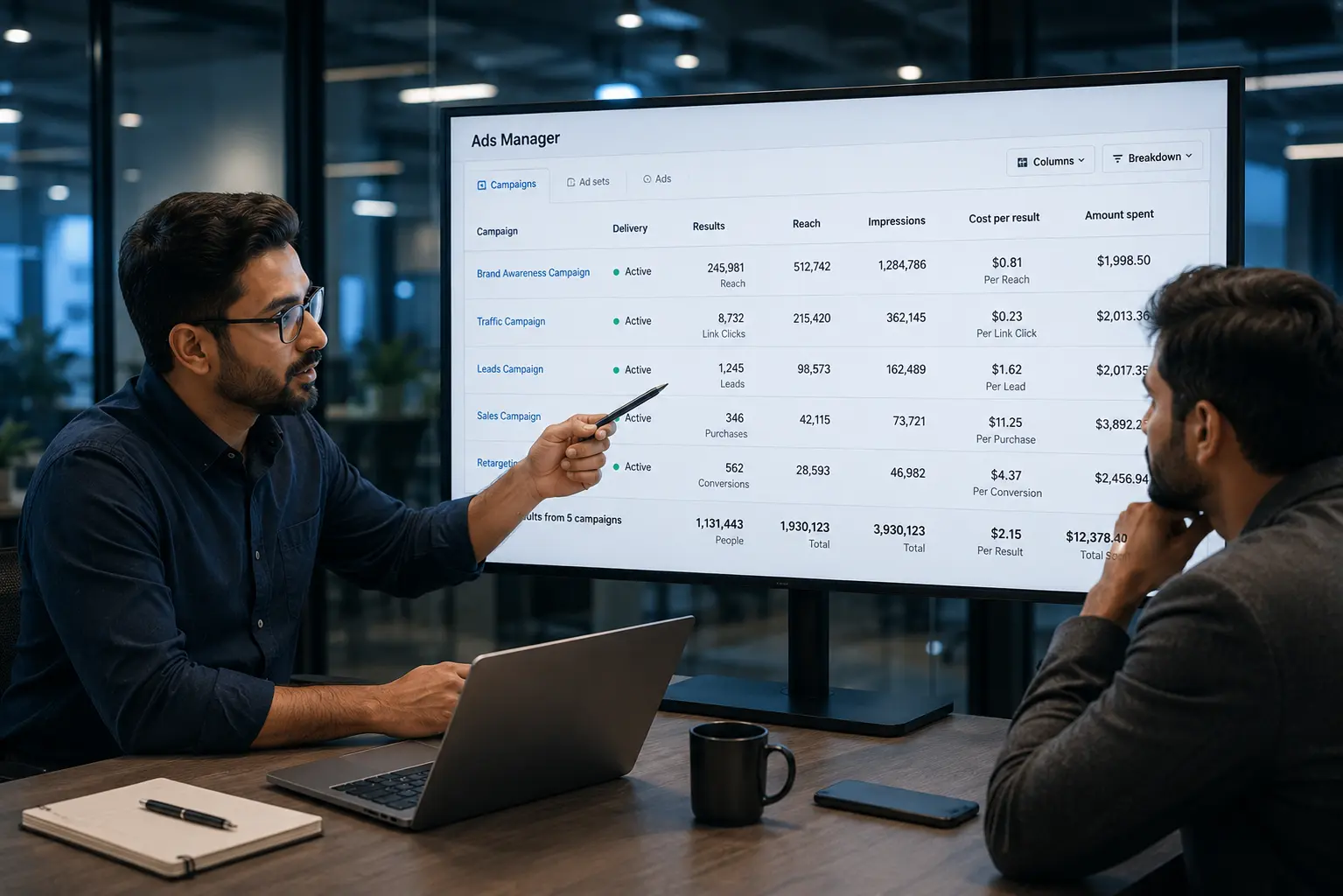
The backend of the Ads Manager is powered by machine learning that requires massive amounts of data to optimize correctly. The 'Boost Post' button bypasses this entire learning phase, throwing your budget at random users who are likely to 'like' but highly unlikely to 'buy'.
Setting Up Custom Conversions
Before spending any money, ensure your Meta Pixel is configured to track specific actions—like a form submission or a checkout. Tell the algorithm exactly what success looks like, so it can find more people who take that action.
If you want to run ads, you must use the Meta Ads Manager. It is more complex, yes, but it allows you to optimize for conversions, retarget people who visited your website, and create lookalike audiences based on your best customers. Taking the time to learn the Ads Manager—or hiring an agency that uses it—is the single biggest return on investment you can make for your paid advertising efforts.
2. Your Creative is the New Targeting
A few years ago, media buyers spent hours tweaking age, demographics, and interests in the Ads Manager to find the perfect audience. Today, the algorithm is so advanced that it finds the audience for you—provided your ad creative is good enough.
Your video or image (the "creative") is what actually targets your customer. If your video starts with "Attention Cafe Owners in Bhubaneswar," the algorithm will quickly learn to show that ad exclusively to people interested in local cafes and restaurant management. Stop over-complicating your backend targeting and start putting 90% of your effort into making better, more specific videos and graphics. Let the algorithm do the heavy lifting of finding the buyers.
3. User-Generated Content (UGC) Outperforms Polished Ads
People hate being sold to. When they see a highly polished graphic with corporate fonts and a glossy logo, their "ad blocker" brain kicks in, and they scroll past. The ads that perform the best in 2026 are the ones that don't look like ads at all.
User-Generated Content (UGC)—videos that look like they were shot by a regular person on an iPhone—consistently lower Cost Per Acquisition (CPA). A simple, authentic video of a founder explaining a problem and offering a solution will almost always beat a high-budget commercial production. Authenticity scales because it builds immediate trust with the viewer.
4. The "Leaky Bucket" Problem (Fix Your Landing Page)
We often audit ad accounts for clients who complain that their ads are failing. When we look at the data, the ads are actually performing brilliantly—people are clicking them at a very low cost. The problem is that when they click, they land on a slow, confusing, poorly designed website that doesn't work on mobile.
Sending paid traffic to a bad website is like pouring water into a leaky bucket. Before you spend a single rupee on Facebook or Google Ads, you must ensure your landing page is fast, clear, and makes it incredibly easy for the user to contact you or make a purchase. An optimized landing page can literally cut your ad costs in half by doubling your conversion rate.
5. Retargeting: Where the Real Money is Made
Imagine someone walks into your physical store, looks at a product, and walks out. If you had the ability to politely remind them about that product a few days later, wouldn't you? That is what retargeting does.
Most conversions happen on the 3rd or 4th touchpoint. By placing a Meta Pixel on your website, you can run incredibly cheap ads strictly to people who have already visited your site but didn't buy. These are your warmest prospects, and failing to retarget them means you are leaving easy revenue on the table.
The Bottom Line
Running paid ads requires patience and data. You have to be willing to test multiple videos, headlines, and offers to see what the market actually responds to. It is not a slot machine; it is a science. If you approach it methodically, focus on your creative, and fix your landing page, paid ads remain the fastest way to scale a business in India.
Stop Wasting Your Ad Budget
If your Facebook or Google Ads aren't generating a positive ROI, let our experts take a look. We build data-driven ad campaigns that actually convert clicks into paying clients.
Request a Free Ad Account Audit →